
Referendum in Italy - Is Italexit Coming?

Buongiorno, fellow forex traders! Old Europe had barely had time to recover from Brexit before winter started throwing fresh political risks in our faces, and this time straight from Italy. The constitutional referendum scheduled for December 4 may trigger noticeable spikes in volatility across all euro pairs and threatens the political and economic stability of the EU as a whole. Perhaps another "Black Swan" is coming.
How significant are these risks? How will the markets behave and how should ordinary traders react? Below in this review we will discuss the most likely scenarios for how events may unfold and try to orient our trading tactics around them.
What happened?

The bill aimed at changing the Italian Constitution was proposed back in 2014 by the Democratic Party led by the current Chairman of the Council of Ministers, Matteo Renzi. In 2016 the project was finally adopted by the Senate and the Chamber of Deputies, but there were still not enough votes for immediate adoption, while for a referendum there turned out to be more than enough. The draft amendments themselves imply fundamental reforms in Italy's political system: in the procedure for convening the Senate, as well as reducing its size, functions and powers and, accordingly, funding. The bill will be adopted if 500 thousand voters vote for it.
Significance and risks

Many analysts felt that the referendum results could not only once again undermine the economic stability of the European Union, but also push it toward disintegration. In the event of a positive voting outcome, the risks are not so great; however, if voters cast their ballots against Renzi's legislative initiative, his government may collapse, which will lead to another round of political chaos in the country.
Italians are of course no strangers to this (after all, this is already the third constitutional referendum in the last 15 years), but what worsens the situation is the catastrophic problems in the national banking sector. Take, for example, the oldest existing bank in the world, Monte dei Paschi di Siena, whose loan debt has exceeded €40 billion. In general, banking debt amounts to more than €300 billion. At the same time, Italy's economy still remains peripheral and for quite a long time now has lived only thanks to major financial stimulus from the ECB.
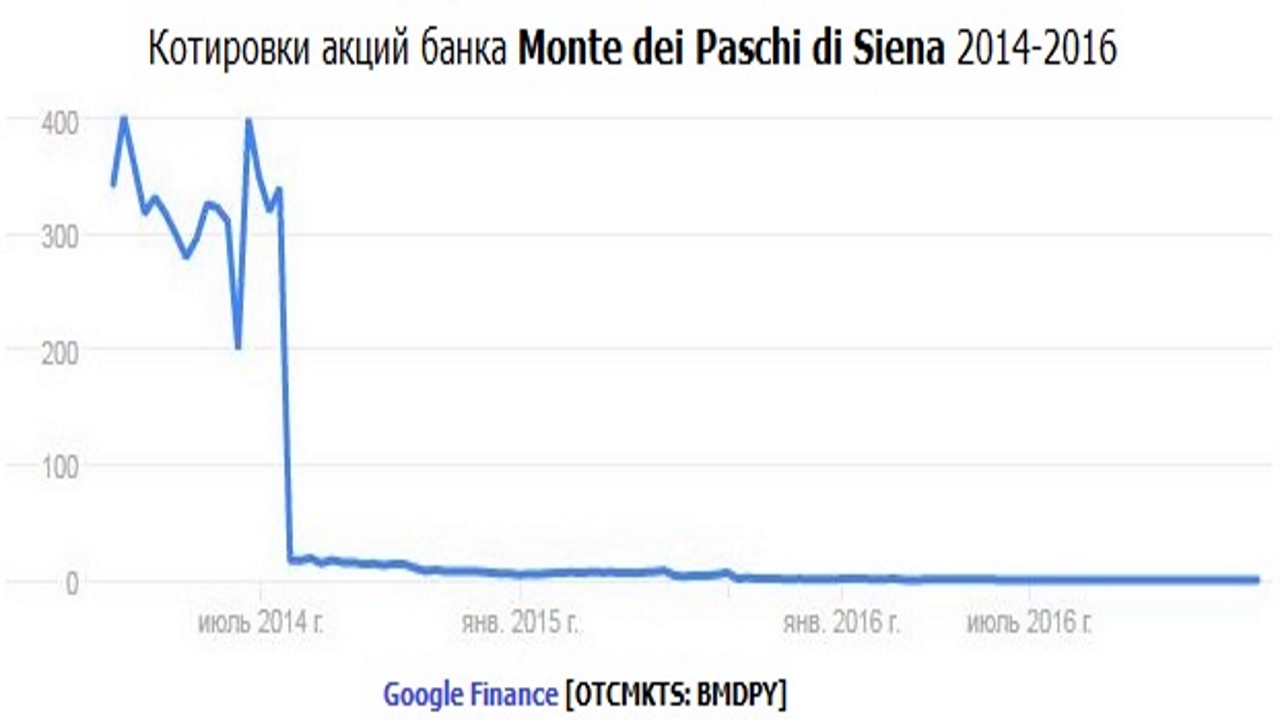
Speaking about the roots of the problem, it should be emphasized that construction and real estate played a key role in Italy's banking problems. It was precisely these sectors that accounted for a large part (more than 40%) of non-performing loans, and this share continues to grow. From 2010 to 2015 housing prices fell by 14%, and at the pace of the current financial year these prices dropped by 1.2%, marking the biggest losses among EU countries (not counting the markets of Cyprus and Greece, for which there is still no data).
So, we have sorted out the source of the problem, and now let's talk about the risks.
If the referendum fails, several international asset classes will suffer:
- Bond prices will fall. Sovereign debt will rise even more and the banking system will sink to the bottom. On the other hand, this may have a positive effect on safe bonds, including German ones. Other EU countries, such as Portugal, Greece and Spain, may also suffer.
- Shares of companies in all European Union countries will weaken: European stock indices are already showing negative dynamics today, caused by investors' reaction to the events in Italy. The financial sector is expected to take the biggest losses. Spanish, Greek and Portuguese bank shares will follow the Italian ones. Because the ECB will not be able to support everyone at once, but we will mention this again later.
- In the currency markets the euro will weaken, while the Swiss franc, the US dollar and\or the Japanese yen may benefit by acting as traditional and safe instruments for hedging financial risks.
- Gold may gain upward momentum, once again taking into account investors' tendency to hedge political risks through this asset.
- Turmoil in the financial markets will further strengthen the ECB's stimulus policy and perhaps even expand the bond-buying program.
Let us mention one more important point related to the European Central Bank. ECB officials have already acted as guarantors of stabilizing the Italian process in the event of failure, committing themselves to support the yield on treasury bonds. Incidentally, this news served as the driver for Monte dei Paschi bank to rise by as much as 17% on Wednesday, November 30. However, the need for spending on supporting Italian bonds will turn into weakness both for the single currency and for other peripheral markets sustained by ECB stimulus - Portugal, Greece and Spain.
Recommendations for traders

According to the latest polls, opponents of the reform are leading by a margin of about 5-7%.
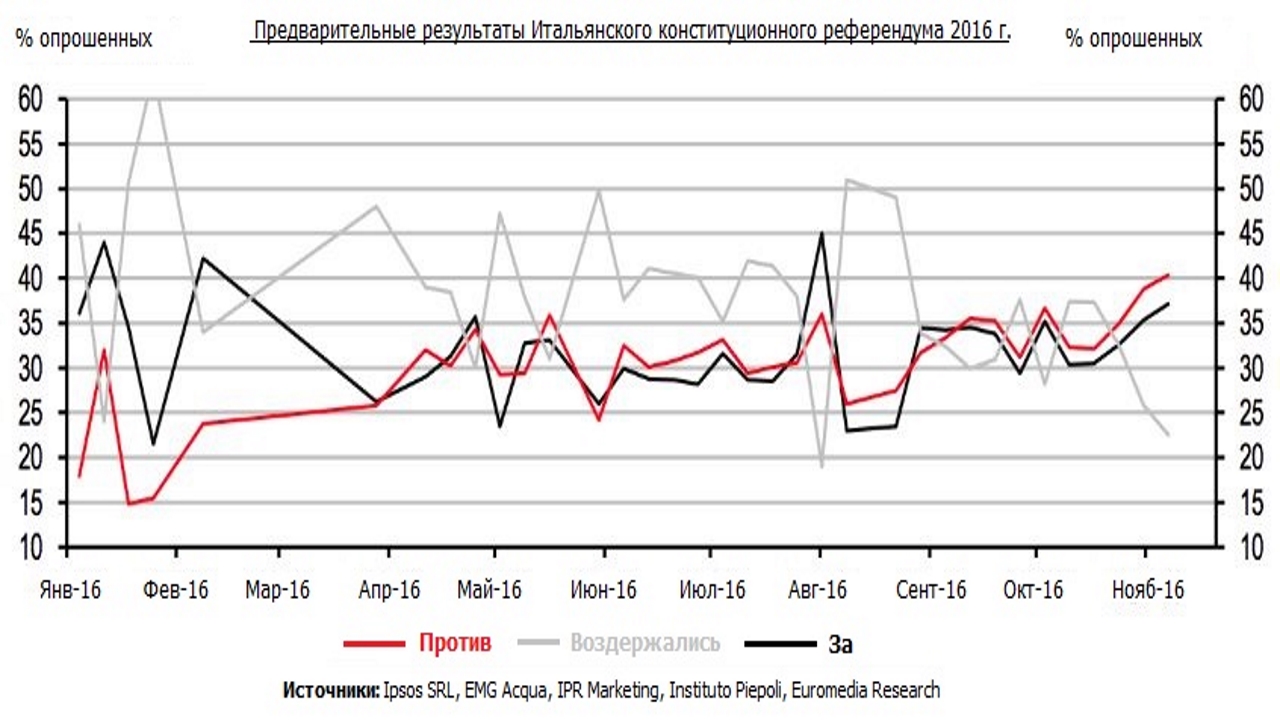
If the referendum fails (and the referendum will take place on Sunday), EUR pairs will open with a gap downward, and in this situation we recommend opening positions to sell the single currency. Then we trade with the market, and the safe currencies deserve special attention here: USD or JPY (depending on market conditions), as well as CHF - through which investors will rush to hedge themselves.
Incidentally, many brokerage companies may introduce restrictions on leverage. For example, FxPro has already announced its intention to implement limiting measures - as early as this Friday. Follow the news, and in any case it is better to once again clarify this point personally with your broker.
In general, we warn traders against trading during periods of abnormal market volatility, which in itself is not the best backdrop for conducting trading operations, and perhaps you should refrain from unnecessary risks. Arrivederci, signori traders!
Respectfully, Aleksey Vergunov TradeLikeaPro.ru
