
Cryptocurrency Issuance: Inflationary and Deflationary Models
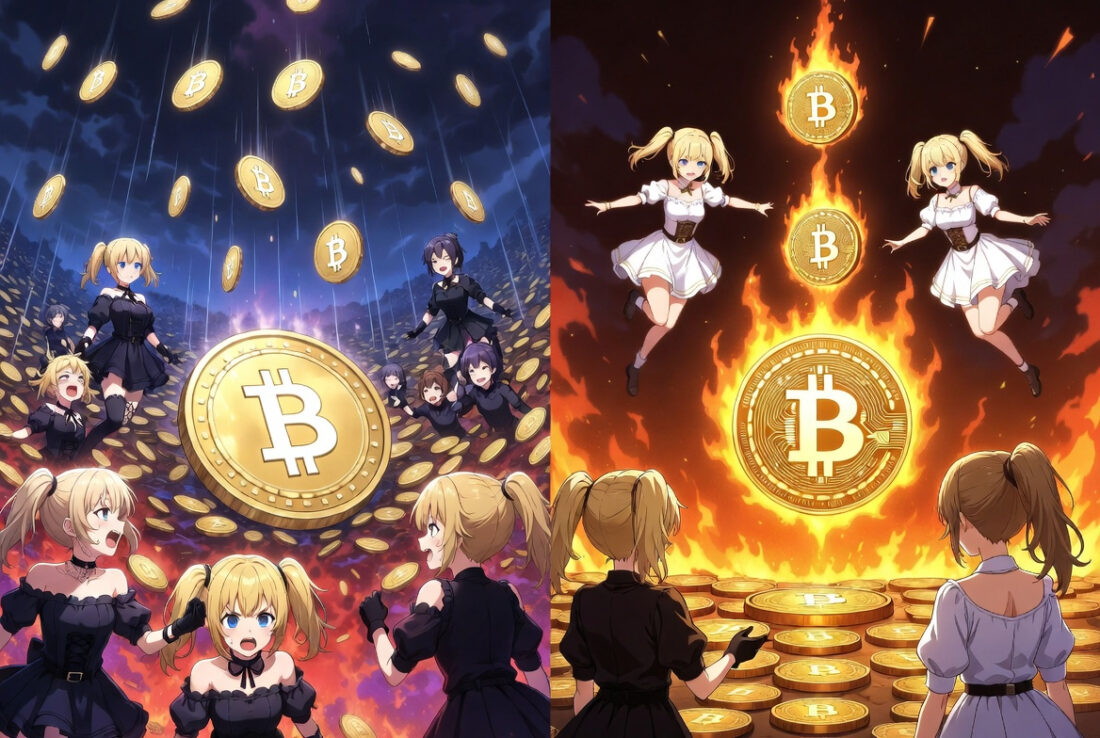
Cryptocurrency issuance is the process of creating new token units and putting them into circulation. It is one of the key elements of the tokenomics of any blockchain project and directly affects the value of the asset, user behavior, and network resilience.
In the traditional financial system, money issuance is controlled by central banks. In the world of cryptocurrencies, the rules for issuing new coins are usually programmed into the protocol and known to network participants in advance. This ensures transparency and predictability of monetary policy.
Depending on how the total number of coins changes over time, two main issuance models are distinguished: inflationary and deflationary.
Inflationary and deflationary cryptocurrency issuance models are two opposite approaches to issuance and coin supply management. The type of issuance determines whether the number of tokens will grow, remain unchanged, or decrease over time, which directly affects the asset's long-term value and the behavior of network participants.
The choice of one issuance model or another determines whether a cryptocurrency will potentially serve as a store of value ("digital gold") or as a medium of exchange for everyday transactions.
What cryptocurrency issuance is in simple terms

Issuance means the release of new tokens or coins that occurs according to predetermined rules. These rules determine:
- the maximum number of coins in the system;
- the rate at which new coins appear;
- the conditions of their distribution;
- the mechanisms for destroying (burning) tokens.
New coins can appear in different ways:
- mining — a reward to miners for creating blocks;
- staking — a reward to validators for confirming transactions;
- programmatic issuance — periodic creation of new tokens by the protocol;
- distribution through development funds or a DAO.
Issuance determines the monetary policy of a cryptocurrency and shapes the balance between incentivizing network participants and preserving the value of the token.
There are three types of cryptocurrency issuance models:
- Inflationary model — new tokens are minted continuously.
- Deflationary model — new tokens almost never appear, and issued coins are burned.
- The hybrid model combines features of the main models; switching from one model to another depends on network activity.
Inflationary cryptocurrency issuance model: the protocol's "printing press"

The inflationary model assumes that the total number of coins increases over time: new tokens are created regularly and enter circulation. Thus, in this system the protocol provides for constant or gradually decreasing issuance.
New coins are usually distributed among network participants: miners (Proof-of-Work), stakers (Proof-of-Stake), developers, and the project treasury. This makes it possible to support the network economy and stimulate its development.
The inflationary model is used for several reasons:
- Incentivizing network participants. New coins are used as rewards for helping maintain network security.
- Maintaining ecosystem activity. Inflation creates a constant flow of funds for validators, developers, and users.
- Encouraging transactions. Inflation encourages spending coins rather than hoarding them, which contributes to the development of the project's economy and the use of the token as a medium of exchange.
- Network resilience. Regular rewards motivate participants to maintain blockchain infrastructure.
- Economic flexibility. The project can direct new tokens toward ecosystem development, grants, and attracting new users.
The advantages of the inflationary model include encouraging network participation, supporting blockchain security, and providing funding for project development.
But the inflationary issuance model is not without drawbacks. Over time, the token's purchasing power may decline, and if demand is low, the asset's price may fall. In addition, if there are too many new tokens, the share of coin holders becomes diluted (dilution).
A classic example of the inflationary model is Dogecoin (DOGE). Its issuance is unlimited: every year a fixed amount enters circulation — 5 billion new coins. This provides predictable inflation that gradually declines in percentage terms (about 3.5% in 2025-2026).
Many Proof-of-Stake networks, such as Solana (SOL), Polkadot (DOT), and Cosmos (ATOM), are also inflationary. For example, ATOM inflation is about 10% per year, but these tokens are distributed among stakers who support network security.
Deflationary Issuance Model: Hard Cap and Burning

A deflationary model means that the supply of coins is limited or decreases over time. This is achieved either by a hard cap on issuance or by mechanisms that reduce supply.
The following mechanisms are used in a deflationary system:
- Limited maximum supply (FixedSupply). The protocol sets a limit on the number of coins.
- Halving (Halving). A periodic reduction of the reward for a mined block, which decreases the rate at which new coins enter the market. In the Bitcoin network, this happens every 4 years.
- Fee burning. A certain share of fees is automatically removed from circulation.
- Token burning (burn). Part of the coins is destroyed forever.
- Buyback& burn. The project buys tokens back from the market and burns them.
The economic logic of deflation is based on a simple principle: if supply decreases while demand (the inflow of liquidity) remains the same or grows, the value of the asset may increase.
Therefore, deflationary cryptocurrencies are often regarded as a store of value, strange as that may sound in relation to cryptocurrencies.
The advantages of a deflationary token issuance model include protection against value dilution and the presence of an incentive for long-term holding, which can ultimately lead to price growth as demand increases.
The disadvantages of the deflationary model are also obvious:
- The risk of "dying from scarcity." If people only accumulate coins and do not spend them, this can undermine the token's utility and the network's liquidity.
- Reduced incentives for miners. As the block reward decreases, network security must be maintained solely through fees, which can become a problem during periods of low activity.
- Dependence on demand. Deflationary mechanisms work only if there is steady demand. If interest in the project declines, deflation will not save the price from collapsing.
The most famous example of a deflationary token is Bitcoin. Bitcoin's maximum supply (BTC) is strictly limited to 21 million coins. Moreover, the rate at which new coins appear (issuance) is programmed to be cut in half every four years (the so-called "halving"). This makes Bitcoin a truly scarce asset and, as demand grows, one protected from internal inflation.
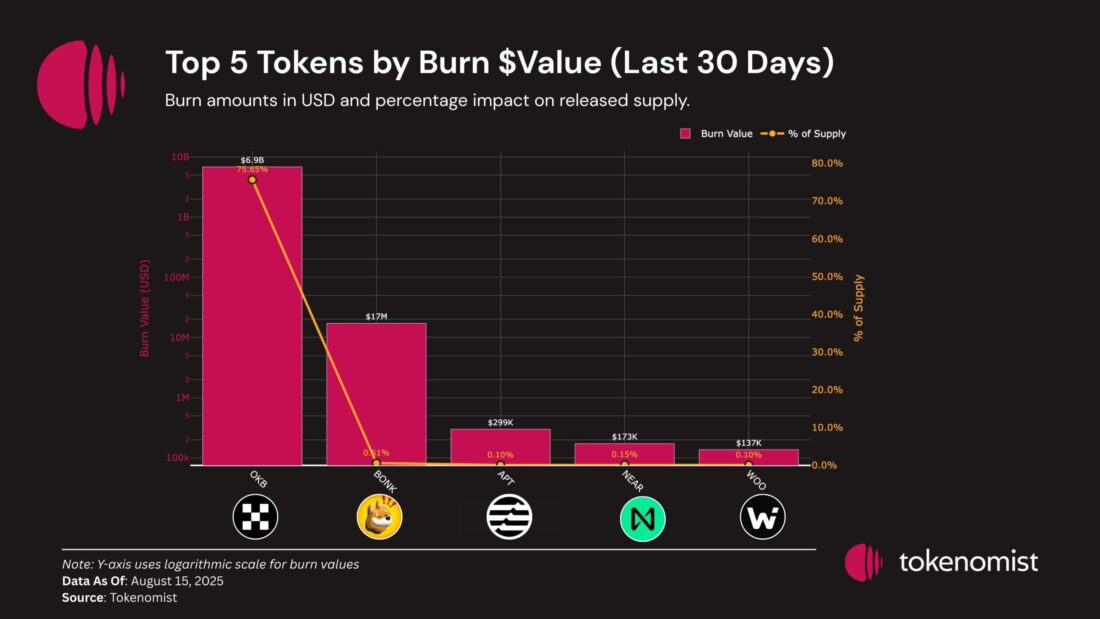
In the Avalanche (AVAX) network, part of transaction fees is burned, that is, permanently removed from circulation. This makes AVAX a partially deflationary asset.
Also as an example, one can cite the fact that the Binance crypto exchange burns part of its BNB tokens quarterly until the total supply is reduced to 100 million (half of the original amount).
Hybrid Issuance Model: An Attempt to Combine the Best

In practice, many projects use a combined model that combines inflation and deflation. In such projects, new coins are created for rewards (inflation), while at the same time part of the fees is burned (deflation).
As a result, actual issuance can change depending on network activity. If issuance is higher than utilization, the model is inflationary in nature, but if the amount burned exceeds the issuance volume of new coins, the cryptocurrency becomes deflationary.
Such a model allows one to simultaneously:
- incentivize validators,
- maintain network security,
- limit supply growth.
Ethereum is the only major coin that can be both inflationary and deflationary.
Issuance (the inflationary part). After The Merge (2022), ETH began developing within the logic of Proof-of-Stake. New ETH is issued only as a reward to stakers (validators): currently ~999 000 ETH per year (approximately 0.82% of the total supply).
Burning (the deflationary part). After EIP-1559 (2021), part of transaction fees (base fee) is burned forever. The more active the network (DeFi, NFT, L2), the more is burned.
As a result, during periods of high activity more coins are burned than issued (deflation), and during periods of low activity more are issued than burned (light inflation).
At the beginning of 2026, the annual burn was very low (~8000 ETH) due to the Dencun upgrade and the shift of activity to L2. Total inflation ranges from 0.23% to 0.82% per year. The staking volume equals ~37.6 million ETH (31% of the total), and the APY (annual percentage yield) of stakers is ~3-5%.
If activity grows, for example, to the levels of 2021, then Ethereum will become deflationary again.
Comparison of Crypto Issuance Types
| Column 1 | Column 2 | Column 3 | Column 4 |
|---|---|---|---|
| Parameter | Deflationary (Bitcoin-type) | Inflationary (Solana-type) | Hybrid (Ethereum-type) |
| Max Supply | Hard cap forever | None or very high | None (infinite) |
| Current inflation | 0.82% (BTC) | 3.96% (SOL) ~4% (DOGE) | +0.23-0.74% (ETH) |
| Long-term inflation | 0% (after 2140) | 1.5% (target) | 0-1.5% (depends on network activity) |
| Token creation mechanism | Halvings every 4 years + mining | Constant issuance + staking | Issuance to stakers + dynamic burning |
| Token burning | No (only lost coins) | Partial (fees) | Strong (EIP-1559: base fee is burned) |
| Dilution | Minimal / negative | Medium-high | Low or negative |
| Passive income | Only price growth | High staking (5-7.5%) | Medium staking (3-5.5%) + price growth |
| Impact on price when demand grows | Very strong (scarcity) | Medium (must outpace issuance) | Strong at high activity |
| Dilution calculation on $10 000 (after 1 year with no price growth) | +0.5-1% (remains ~10 050-10 100 $) | -3.96% (remains ~9 604 $). With staking +6.5% -> 10 254 $ | -0.5% (remains ~9 950 $). With deflation -> growth |
| Main risks | Declining interest | Strong dilution with weak demand | Depends on load |
| Best suited for | Long-term HODL, "digital gold" | Active staking + DeFi | Network use + long-term holding |
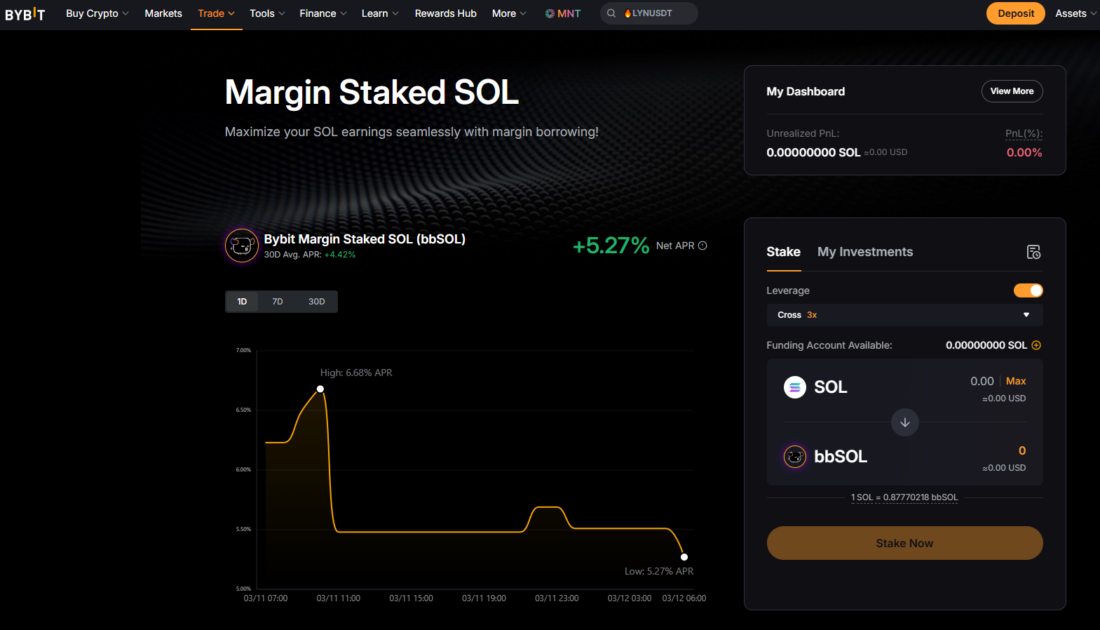
For example, Bybit offers participation in SOL staking.
General Recommendations for Token Analysis
Experts agree that the division into "bad" inflation and "good" deflation is too simplistic. What matters much more is not the type of model, but the balance between demand and cryptocurrency issuance. A project may be inflationary and still successful if demand for its tokens consistently exceeds the pace of new coin issuance.
When analyzing a cryptocurrency, specialists recommend paying attention to the following metrics:
- Emission Rate: How fast is the supply growing?
- Burn Rate: How many tokens are being destroyed?
- Staking Ratio: What percentage of coins is locked in the network and not putting pressure on the market?
- Unlock Calendar: When will investor and team tokens enter free circulation? This may cause a sharp spike in inflation.
- Utility: What is the token actually needed for? The higher the real utility, the easier it is for the network to absorb new issuance.
How the Issuance Model Affects Price and What Follows from It
There are general ideas about how issuance affects a cryptocurrency.
If a token is "inflationary," then its price grows only with huge demand, which must outpace issuance. At the same time, there is an opportunity to earn income from staking. "Deflationary" coins are designed around limiting supply, which means each new buyer contributes to growth. This is ideal for bull cycles.
Thus, if the market is rising, deflationary and hybrid tokens benefit. If the market is moving sideways, inflationary coins generate staking income.
Instead of a Conclusion
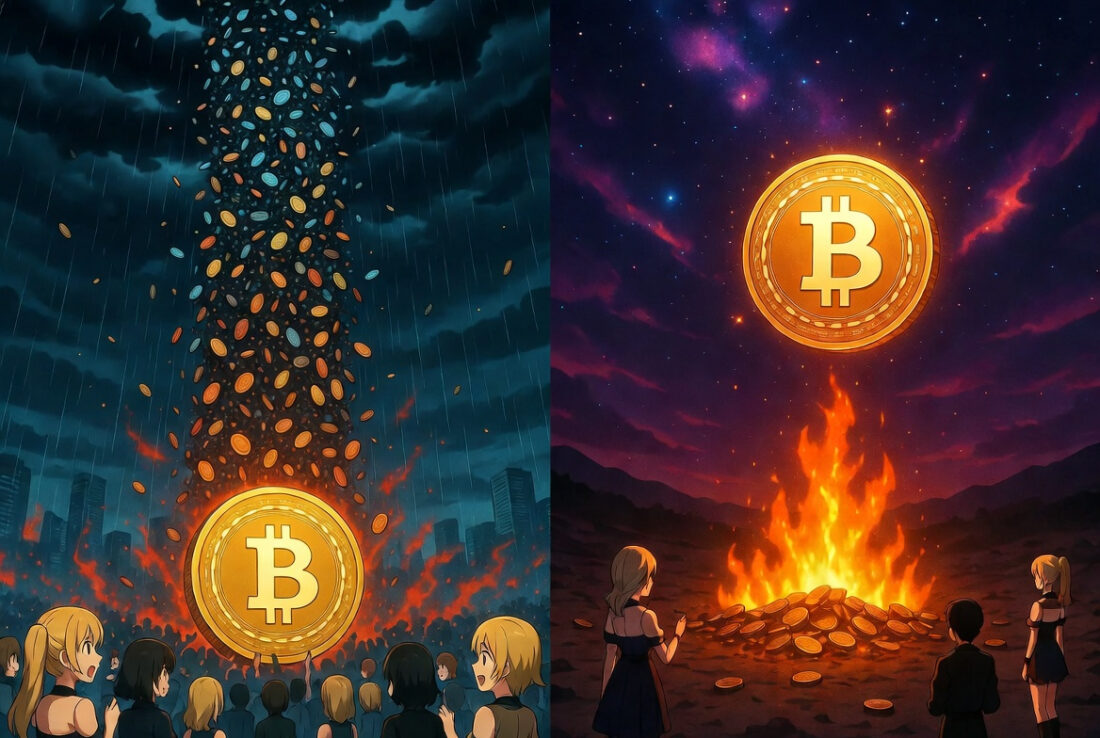
Cryptocurrency issuance is a fundamental element of their economic model. The balance between network development and preserving the value of the asset depends on how new coins are created and distributed.
The inflationary model provides constant incentives for network participants and supports its operation. The deflationary model is focused on limiting supply and potentially increasing the value of the token. Modern blockchain projects increasingly use hybrid mechanisms, seeking to combine the advantages of both systems and create a sustainable digital economy.
None of the models is unequivocally the best. The success of a cryptocurrency depends on how harmoniously its tokenomics is combined with real utility and the level of adoption by the community.
As practice shows, even a memecoin with infinite issuance (DOGE, at the time of writing this article, market capitalization is $14 billion) can hold positions in the top for a long time if a strong and active community has formed around it that uses the coin for real purposes.